Two-minute stretch breaks for busy days
Some days you only have a couple of minutes, and a short break you finish beats a long one you skip. These routines run two to three minutes, need no equipment and fit between calls, tasks and school pickups.
Start with a free 5-minute stretchFree first, no account needed. Then Get Up and Move (2 min, guided by voice) and every routine with a 7-day free trial: card required, nothing charged before day 8.
Good for
- Between meetings or tasks
- Getting up after a long stretch of sitting
- Days when a full routine is out of reach
- Starting a habit with the smallest possible step
Why a few slow minutes can help
Occupational guidance recommends brief, regular breaks to change posture. A two-minute stretch is short enough to do often, and doing it often matters more than doing it long.
Each routine uses the same few easy movements: a march, a side bend and a counter or chair stretch. They get the blood moving without making you sweat.
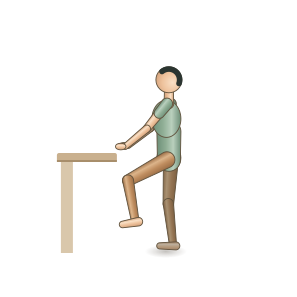
Get Up and Move
Two minutes on your feet between sitting.
- 2 minutes
- 3 movements
- Wall
- Wall, Standing
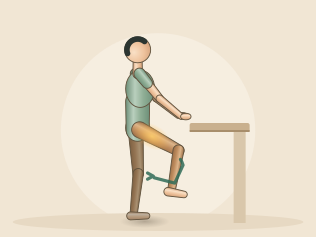
Supported march
Lift one knee to a comfortable height, lower it, then lift the other.
Easier: Lift your heels only, keeping your toes on the floor, or march while seated.
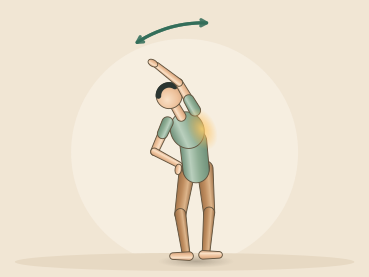
Standing side bend
Reach your left arm up and lean gently to the right side.
Easier: Keep your left hand on your hip and lean only a little.
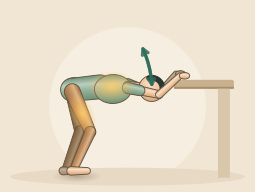
Counter hinge stretch
Walk your feet back and hinge at your hips, letting your chest lower between your arms.
Easier: Keep your feet closer to the counter and hinge only partway.
Tips for a comfortable session
- Link the break to something you already do, such as after sending an email or filling a cup.
- Stand up first. Even before you stretch, standing up counts.
- Stack two routines on a day when you have the time.
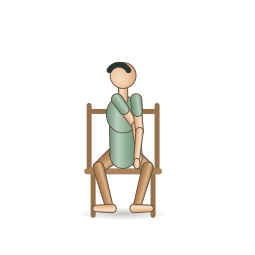
Desk Micro-Break
Two minutes, right where you sit.
- 2 minutes
- 3 movements
- Chair
- Chair
- Shrug and release30 s
- Gentle chin tucks30 s
- Seated chair twist30 s each side
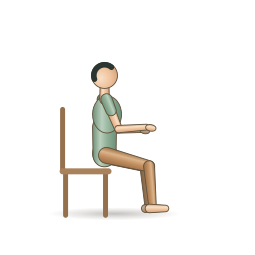
Three-Minute Breather
Breathe, drop your shoulders, soften your jaw.
- 3 minutes
- 3 movements
- Chair
- Chair
- Seated long-exhale breathing1 min
- Shrug and release1 min
- Jaw and face release1 min
Common questions
How long is the Get Up and Move routine?
2 minutes and 3 timed movements. Left and right sides get equal time, and a voice guides every change.
Do I need a mat or any equipment?
You need: wall. Setups used: wall, standing. The app can swap floor movements for chair or standing versions.
What does ReliefFlow cost?
Every plan starts with a 7-day free trial. A card is required to start it, and you pay nothing if you cancel before day 8. After that it is $5.99 a month or $49.99 a year, and you can cancel any time from Manage billing.
Is it safe if something already hurts?
ReliefFlow is general wellness guidance, not medical advice. Keep the movements easy and skip any that cause pain. Use a wall or counter for balance if you feel unsteady. Stop if anything hurts, and talk to a health professional about pain that is sharp, radiating, new or does not ease.