Slow stretches for a calmer end to the night
These routines are built to be done in bed or on a rug with the lights low. They use small, supported movements and long breaths, and they get slower as they go, so the last minutes feel more like resting than exercising.
Start with a free 5-minute stretchFree first, no account needed. Then Soft Landing (10 min, guided by voice) and every routine with a 7-day free trial: card required, nothing charged before day 8.
Good for
- Lying awake with a busy mind
- Evenings when you feel wound up after screens
- Stiffness from a long day of sitting
- Keeping a short, repeatable bedtime habit
Why a few slow minutes can help
People often describe a regular wind-down as the most helpful part of falling asleep. Slow movement, a quiet voice and breathing out for longer than you breathe in give your attention something simple to follow.
Nothing here is a sleep aid. It is a calm way to spend the last few minutes of the day, and you can stop at any point and simply rest.
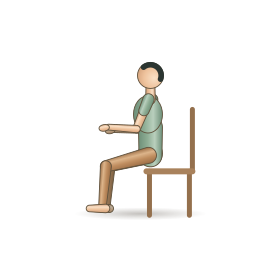
Soft Landing
Sit on the edge of the bed, then lie back and let go.
- 10 minutes
- 6 movements
- Chair
- Chair, Floor
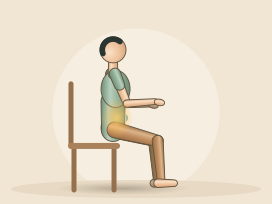
Seated long-exhale breathing
Breathe in through your nose for a count of about four.
Easier: Use shorter counts, or simply breathe naturally and notice the exhale.
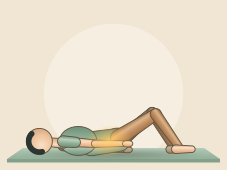
Gentle pelvic tilts
Gently tighten your lower belly to tip your pelvis and soften the space beneath your lower back.
Easier: Make the tilt barely visible. Stop if it increases back discomfort.
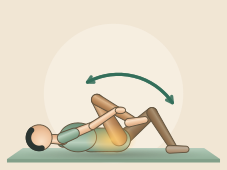
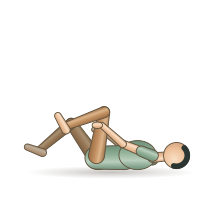
Single knee hug
Bring your left knee toward your chest, supporting behind the thigh with both hands.
Easier: Keep the knee farther away. Avoid this stretch if you have osteoporosis unless your clinician has cleared it.
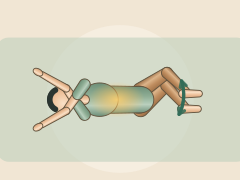
Lying knee rolls
Slowly lower both knees a short distance to the left, keeping both shoulders grounded.
Easier: Use a tiny movement. Skip twisting if it aggravates your back.
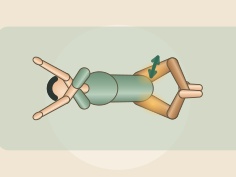
Lying butterfly
Rest your hands on your belly or out to the sides.
Easier: Keep your feet flat and knees bent, or rest your knees on pillows.
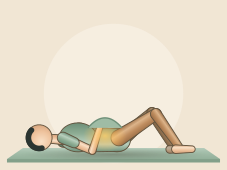
Belly breathing
Rest one hand on your belly and one on your chest.
Easier: Lie on your side or sit in a chair if lying on your back is uncomfortable.
Tips for a comfortable session
- Choose the length by how you feel: five minutes on a tired night, twenty on a slow one.
- Turn the screen brightness down, or close your eyes and follow only the voice.
- Keep a glass of water and a blanket within reach so you do not need to get up.
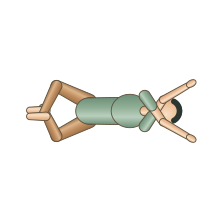
Lights Out
Five minutes on your back, then sleep.
- 5 minutes
- 4 movements
- No equipment
- Floor
- Gentle pelvic tilts1 min
- Single knee hug1 min each side
- Lying butterfly1 min
- Belly breathing1 min
The Slow Drift
Twenty unhurried minutes, ending in your breath.
- 20 minutes
- 9 movements
- Chair
- Chair, Floor
- Seated long-exhale breathing1 min 45 s
- Jaw and face release1 min 45 s
- Gentle pelvic tilts1 min 45 s
- Single knee hug1 min 45 s each side
- Lying knee rolls1 min 45 s each side
- Reclined figure-four1 min 30 s each side
- Lying butterfly1 min 45 s
- Happy baby1 min 30 s
- Belly breathing1 min 30 s
Common questions
How long is the Soft Landing routine?
10 minutes and 6 timed movements. Left and right sides get equal time, and a voice guides every change.
Do I need a mat or any equipment?
You need: chair. Setups used: chair, floor. The app can swap floor movements for chair or standing versions.
What does ReliefFlow cost?
Every plan starts with a 7-day free trial. A card is required to start it, and you pay nothing if you cancel before day 8. After that it is $5.99 a month or $49.99 a year, and you can cancel any time from Manage billing.
Is it safe if something already hurts?
ReliefFlow is general wellness guidance, not medical advice. If sleep trouble lasts for weeks, or you snore loudly, gasp for breath or feel very tired by day, mention it to a health professional. Stop if anything hurts, and talk to a health professional about pain that is sharp, radiating, new or does not ease.