Chair stretches for your whole body
You can cover the neck, shoulders, wrists, hips and legs without leaving your seat. The main routine here runs fifteen unhurried minutes, and the shorter ones fit between tasks or in front of the TV.
Start with a free 5-minute stretchFree first, no account needed. Then Gentle Chair Stretch (15 min, guided by voice) and every routine with a 7-day free trial: card required, nothing charged before day 8.
Good for
- Stretching without getting down to the floor
- Days when you are tired and want the lowest effort option
- Watching TV from the couch
- Sharing a quiet break with someone who prefers to sit
Why a few slow minutes can help
A chair gives you support, so you can pay attention to the stretch instead of balancing. Most seated stretches work the same muscles as floor ones, only with less setup.
The routines move from the top of the body to the bottom, which makes it easy to know where you are, and the timer keeps both sides even.
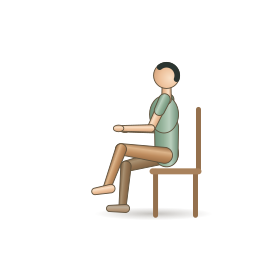
Gentle Chair Stretch
Every movement from a sturdy chair, at an easy pace.
- 15 minutes
- 8 movements
- Chair
- Chair, Standing
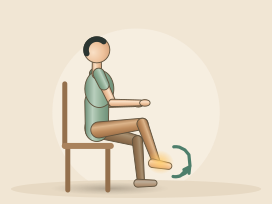
Seated ankle circles
Draw small, slow circles with your toes, moving at the ankle rather than swinging the whole leg.
Easier: Keep the heel lightly on the floor and trace a much smaller circle.
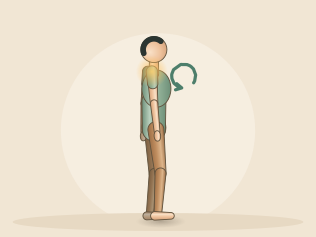
Slow shoulder circles
Slowly lift your shoulders, circle them backward, then let them settle.
Easier: Try this seated, with feet on the floor. Make the circles smaller.
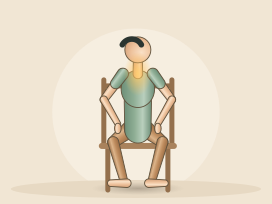
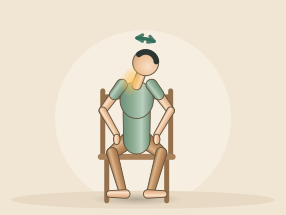
Easy neck rotation
Turn your head a little to the left, keeping your chin level and chest facing forward.
Easier: Turn only a few degrees. Stop if the motion causes dizziness or radiating symptoms.
Gentle neck tilt
Tip your left ear slightly toward your left shoulder, keeping your eyes forward and shoulders relaxed.
Easier: Use a barely noticeable tilt. Stop if you feel dizzy or symptoms travel into your arm.
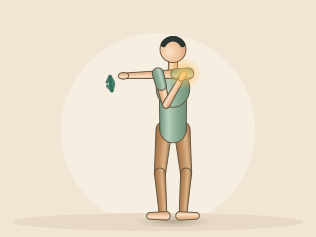
Cross-body shoulder stretch
Use your right hand to support the upper arm above the elbow, without pressing on the joint.
Easier: Keep the arm lower and use less pressure. Skip if you feel pinching.
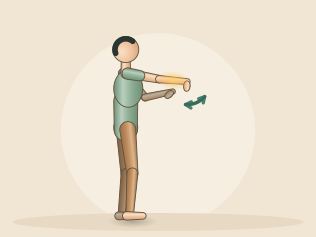
Wrist extensor stretch
Let your fingers point down. Use your right hand to guide the hand gently toward you.
Easier: Leave the other hand off and simply let the wrist bend comfortably.
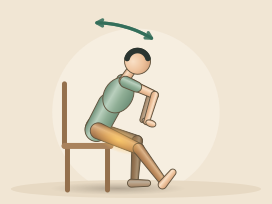
Seated hamstring stretch
Keep your right foot planted. With a long back, tip forward from your hips a little.
Easier: Bend the extended knee more and reduce the forward lean.
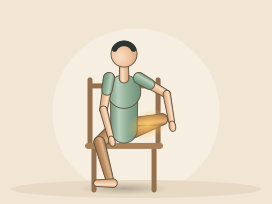
Seated figure-four
Keep your chest lifted. Hinge forward a little from your hips until you feel mild tension in your outer hip.
Easier: Stay upright without leaning. If crossing your leg hurts, skip this stretch.
Tips for a comfortable session
- Sit toward the front edge of the chair with both feet flat.
- Use a chair without wheels, or put the wheel locks on.
- Add one chair routine to something you already do daily, like the first coffee.
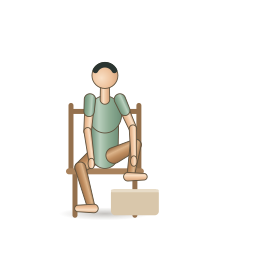
Chair Hip Rotation
Foot up, lean in: open your hips from a chair or the edge of your bed.
- 5 minutes
- 4 movements
- Chair
- Chair
- Chair hip rotation45 s each side
- Seated figure-four45 s each side
- Seated hamstring stretch30 s each side
- Seated ankle circles30 s each side
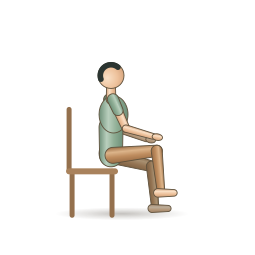
Couch Stretch
Stay on the sofa. Five easy minutes.
- 5 minutes
- 5 movements
- Chair
- Chair
- Seated march45 s
- Seated cat–cow45 s
- Seated chair twist45 s each side
- Seated knee hug30 s each side
- Seated figure-four30 s each side
Common questions
How long is the Gentle Chair Stretch routine?
15 minutes and 8 timed movements. Left and right sides get equal time, and a voice guides every change.
Do I need a mat or any equipment?
You need: chair. Setups used: chair, standing. The app can swap floor movements for chair or standing versions.
What does ReliefFlow cost?
Every plan starts with a 7-day free trial. A card is required to start it, and you pay nothing if you cancel before day 8. After that it is $5.99 a month or $49.99 a year, and you can cancel any time from Manage billing.
Is it safe if something already hurts?
ReliefFlow is general wellness guidance, not medical advice. Sit on a stable chair, and skip any movement that makes you feel unsteady or puts pressure on a sore joint. Stop if anything hurts, and talk to a health professional about pain that is sharp, radiating, new or does not ease.