Gentle stretches for older adults, from a chair
Staying comfortable in everyday movement matters at every age. These routines stay seated or keep a steady hand on a wall, use small movements, and give you time to settle into each one.
Start with a free 5-minute stretchFree first, no account needed. Then Steady and Seated (10 min, guided by voice) and every routine with a 7-day free trial: card required, nothing charged before day 8.
Good for
- Stiffness first thing in the morning
- A gentle daily habit that does not need the floor
- Keeping comfortable for walks, gardening and errands
- Practicing alongside a partner or family member
Why a few slow minutes can help
Guidance for older adults from national health agencies includes activities that support balance and flexibility, done regularly and at a comfortable level. Chair and wall-supported movements are an approachable way to keep moving without getting down to the floor.
Every movement has an easier option, and the guide speaks each cue so you can watch the movement instead of the screen.
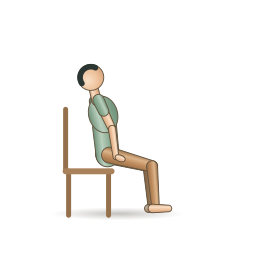
Steady and Seated
An unhurried chair practice for any age.
- 10 minutes
- 10 movements
- Chair
- Chair
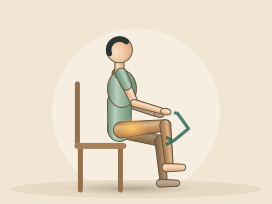
Seated march
Lift one foot a few inches, lower it, then lift the other, like walking in place.
Easier: Lift only your heels, keeping your toes on the floor.
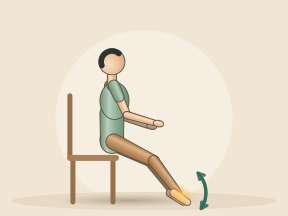
Seated point and flex
Point your toes away from you, then draw them back toward your shins.
Easier: Keep your feet closer to the chair and move through a smaller range.
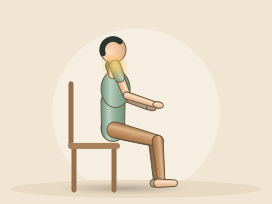
Shrug and release
Lift both shoulders toward your ears as you breathe in.
Easier: Lift your shoulders only a little before letting them drop.
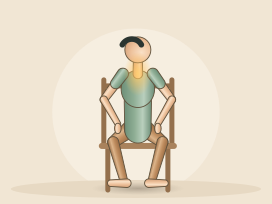
Easy neck rotation
Turn your head a little to the left, keeping your chin level and chest facing forward.
Easier: Turn only a few degrees. Stop if the motion causes dizziness or radiating symptoms.
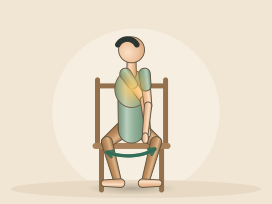
Seated chair twist
Place your right hand on the outside of your left knee and turn your chest gently to the left.
Easier: Keep both hands on your thighs and turn only your chest a little.
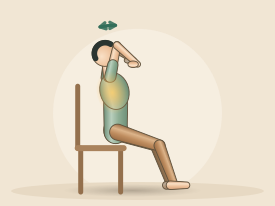
Seated upper-back extension
Lift your chest up toward the ceiling, letting your upper back arch gently over the top of the chair.
Easier: Keep your hands on your chest and lift your breastbone only a little.
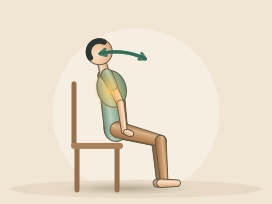
Seated cat–cow
Breathe in and lift your chest, letting your back arch gently.
Easier: Use a very small range, moving only your upper back.
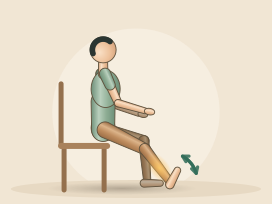
Seated calf stretch
Draw your left toes up toward you, keeping the knee long but not locked.
Easier: Keep the knee a little more bent and draw the toes up less.
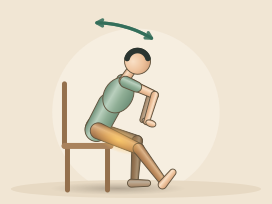
Seated hamstring stretch
Keep your right foot planted. With a long back, tip forward from your hips a little.
Easier: Bend the extended knee more and reduce the forward lean.
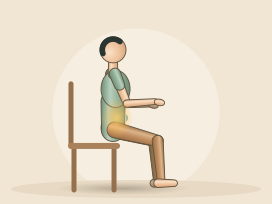
Seated long-exhale breathing
Breathe in through your nose for a count of about four.
Easier: Use shorter counts, or simply breathe naturally and notice the exhale.
Tips for a comfortable session
- Use a sturdy chair without wheels or arms that get in the way.
- Keep a wall or counter within reach for every standing movement.
- Go slowly and stop whenever you need a rest.
Chair-Only Twenty
Twenty minutes, every movement from a sturdy chair.
- 20 minutes
- 14 movements
- Chair
- Chair
- Seated march1 min
- Seated point and flex1 min
- Seated ankle circles1 min each side
- Shrug and release1 min
- Gentle chin tucks1 min
- Gentle neck tilt1 min each side
- Seated chair twist1 min each side
- Seated knee hug1 min each side
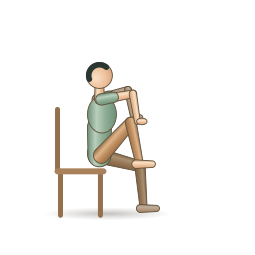
- Seated figure-four1 min each side
- Seated calf stretch1 min each side
- Wrist circles1 min
- Seated upper-back extension1 min
- Seated forward fold1 min
- Seated long-exhale breathing1 min
Wall-Supported Stretch
A wall for balance at every step.
- 10 minutes
- 9 movements
- Wall
- Wall
- Supported march45 s
- Supported heel raises45 s
- Standing leg swings45 s each side
- Wall slides45 s
- Wall chest stretch45 s each side
- Wall calf stretch45 s each side
- Bent-knee calf stretch45 s each side
- Supported quad stretch30 s each side
- Counter hinge stretch45 s
Common questions
How long is the Steady and Seated routine?
10 minutes and 10 timed movements. Left and right sides get equal time, and a voice guides every change.
Do I need a mat or any equipment?
You need: chair. Setups used: chair. The app can swap floor movements for chair or standing versions.
What does ReliefFlow cost?
Every plan starts with a 7-day free trial. A card is required to start it, and you pay nothing if you cancel before day 8. After that it is $5.99 a month or $49.99 a year, and you can cancel any time from Manage billing.
Is it safe if something already hurts?
ReliefFlow is general wellness guidance, not medical advice. If you have osteoporosis, a joint replacement, a heart or blood pressure condition, or a recent fall, ask your clinician which movements suit you before you start. Stop if anything hurts, and talk to a health professional about pain that is sharp, radiating, new or does not ease.